If you’ve ever watched a major marathon, you already know the story: runners from the high-altitude town of Iten, Kenya, consistently dominate the podium.
It’s easy to assume they possess a secret formula, an elite genetic advantage, or a magical training method guarded behind closed doors. But the truth is actually much simpler – and far more practical.
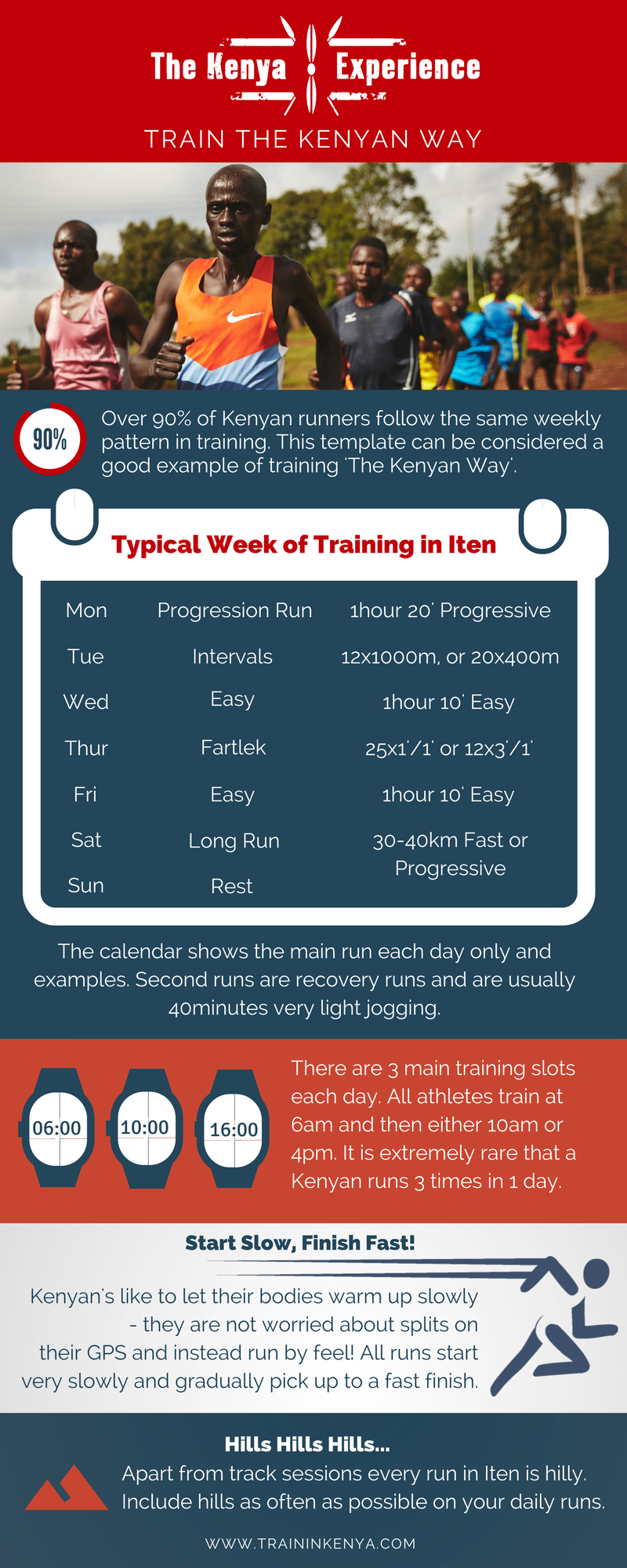
The secret isn’t a mystery; it’s consistency, structure, and simple principles executed day in and day out. In fact, over 90% of Kenyan runners follow almost the exact same weekly routine.
Whether you’re training for your next 5K or aiming for a marathon PB, here is how the world’s best distance runners structure their week – and how you can adapt their philosophy to your own training.
1. Structure Over Complication
Unlike modern training plans loaded with complex heart-rate zones and strict, stressful GPS split times, Kenyan training is surprisingly straightforward. A typical week revolves around key anchor workouts:
- Progressive Runs: Starting at a comfortable jog and naturally picking up the pace.
- Track Intervals & Fartleks: High-intensity speed work to build cadence and lactic threshold.
- The Saturday Long Run: A high-volume effort to build raw endurance.
- Rest: Absolute recovery to let the adaptation happen.
Complementing these main sessions are optional 40-minute light recovery jogs – never overcomplicating the day, just accumulating steady volume.
2. Ditch the Watch: Run by Feel
One of the biggest mistakes runners make is obsessing over their GPS watch from the very first stride.
In Iten, athletes start every single run at a crawl. They allow their muscles, joints, and cardiovascular systems to warm up naturally. Splits on a watch don’t dictate their effort; intuition does. They start slow and finish fast, allowing the body to guide the pace as it gets warm.
3. Embrace the Elevation and Inclines
If you visit Iten, you’ll quickly realise flat ground is a luxury. Aside from track workouts, almost every mile logged by Kenyan athletes is on rolling, hilly terrain. Hills build leg strength, refine running economy, and act as “altitude training in disguise.”
The Blueprint: “The Kenyan Way” at a Glance
Want to see how all these elements fit together into a real, day-by-day training schedule?
We’ve broken down the exact weekly structure used by elite athletes in Iten into an easy-to-follow guide. Check out the infographic below to see the daily workout routines, training time slots, and core principles that power the world’s fastest runners.
👇

Ready to Train Like a Kenyan?
You don’t need to move to the Rift Valley to run faster. By stripping away unnecessary complexity, running by feel, and respecting recovery, you can bring the spirit of Iten to your local routes.